




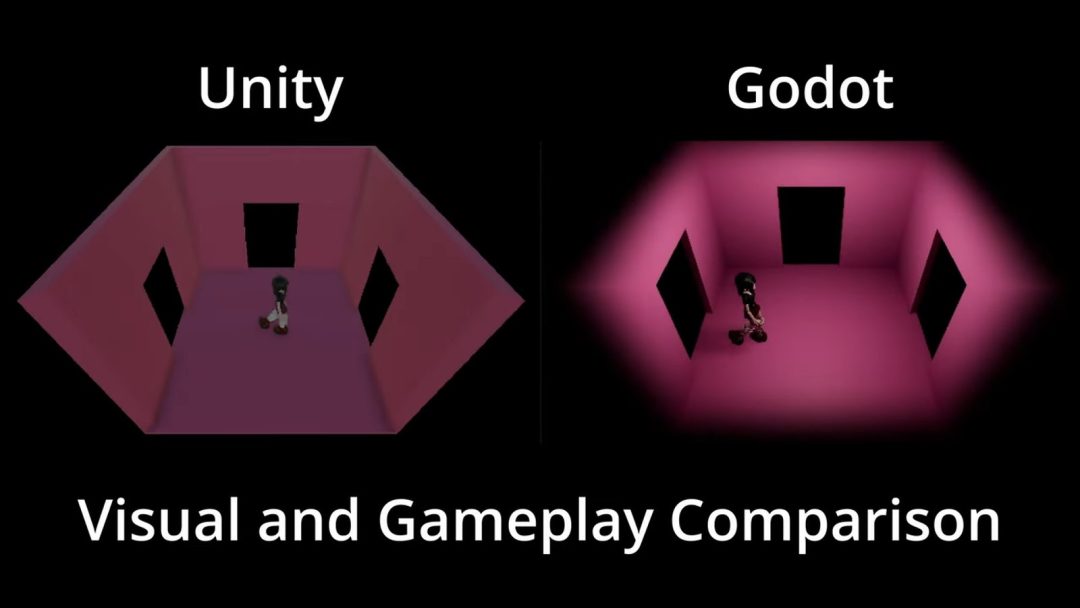
Developer Thomas Grové shared a video on May 17 showcasing his effort to construct the same game using both Unity and Godot Engine, aiming to evaluate their differences. The video has since ignited widespread discussion among developers on Reddit regarding the pros and cons of each engine.
Unity and Godot Engine are both popular general-purpose game engines, especially favored by indie creators. According to a survey by the Game Developers Conference for this year’s “GDC Festival of Gaming,” Unity held a 30% adoption rate as the primary engine choice among developers, whereas Godot Engine secured a 5% share. Despite the significant gap, Godot has been gradually expanding its user base, with notable titles like Slay the Spire 2 recently adopting it. This makes it essential for developers to carefully consider their engine options when starting a new project.
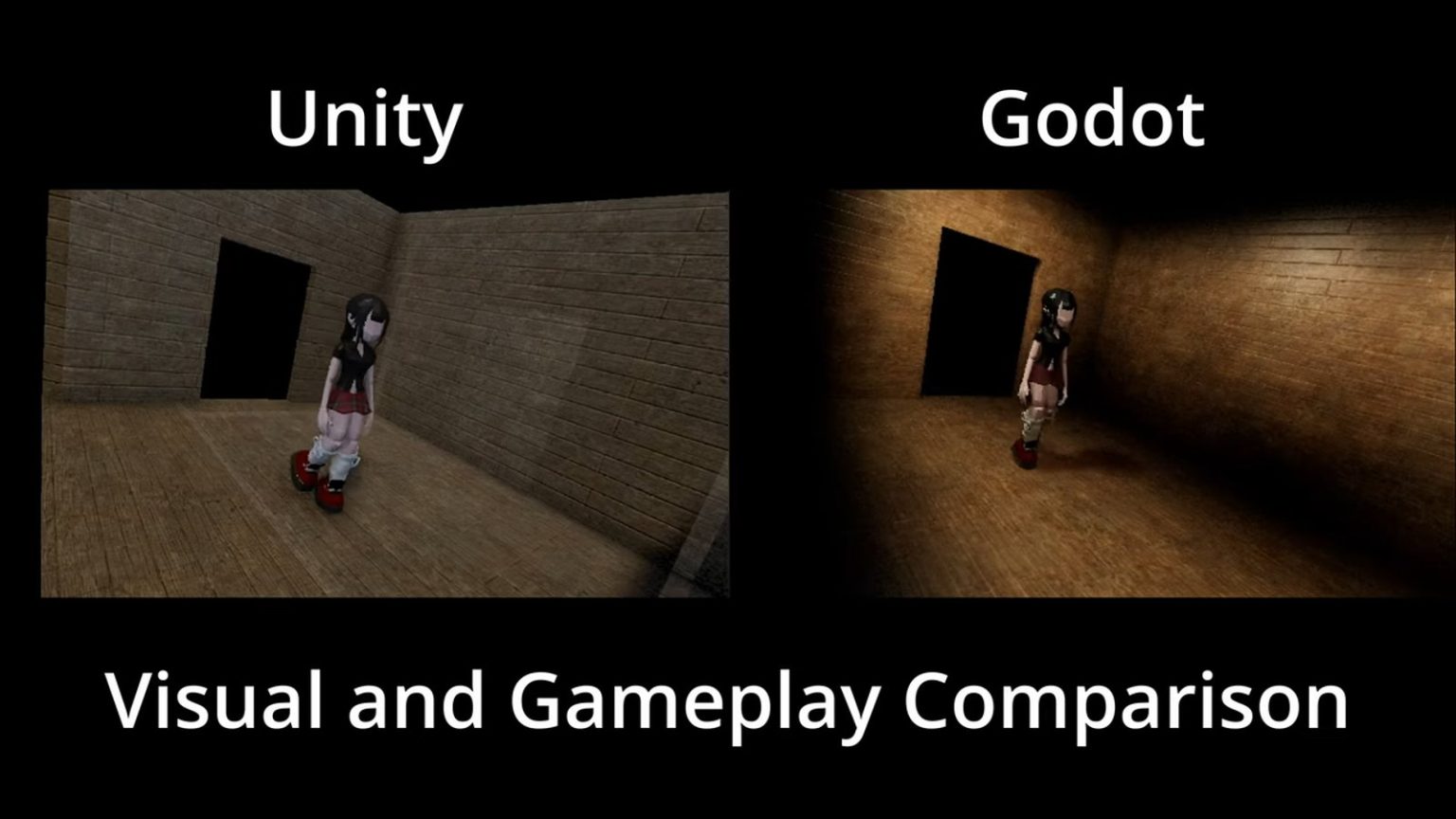
With this context, Grové explained that after establishing the core systems for the horror adventure game he is currently working on, he chose to rebuild the same project in Godot Engine. His intention was to compare the two engines before deciding which one to use for the final development, and he uploaded the video to document the findings from this comparison.
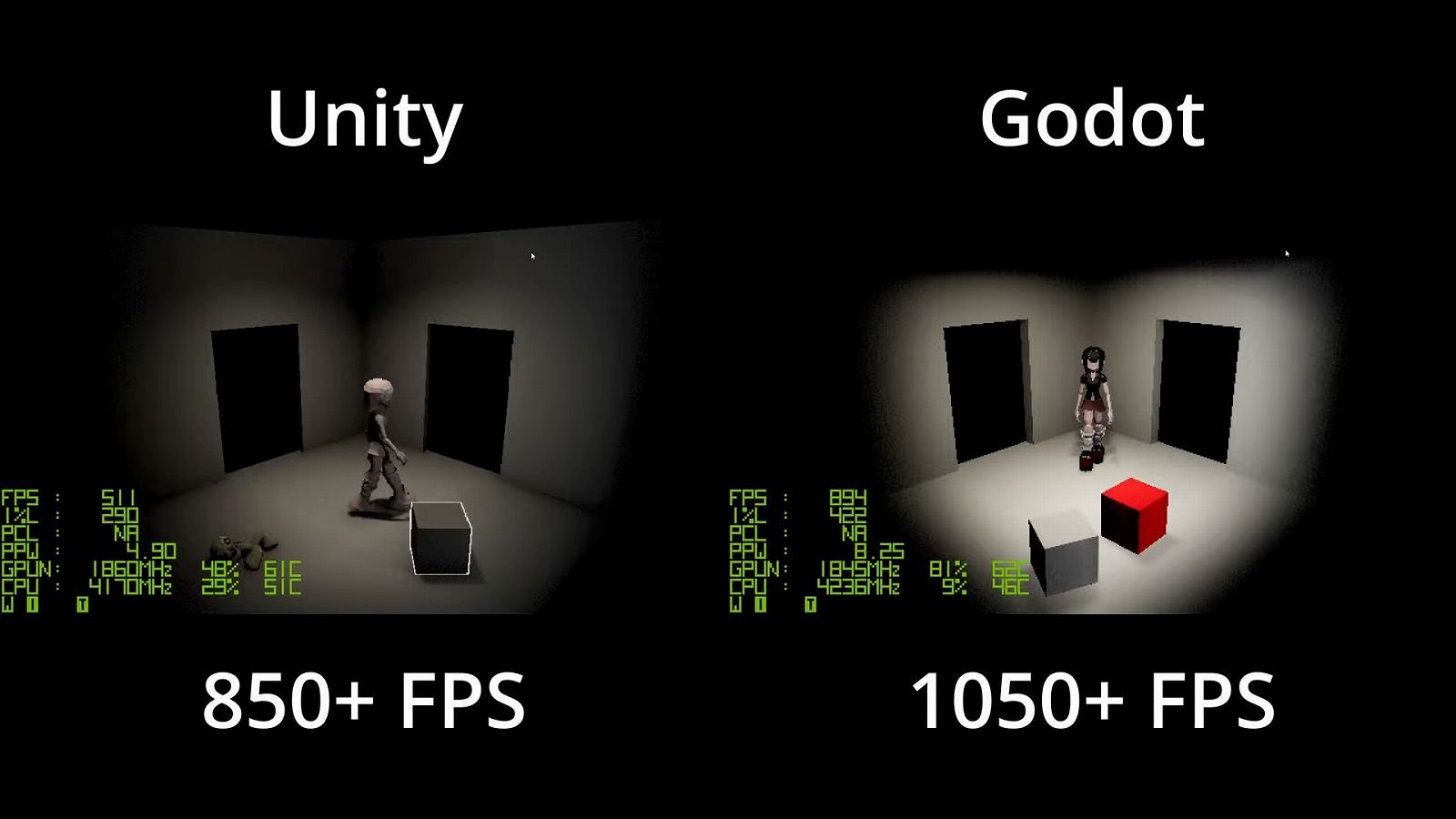
Due to the distinct characteristics of each engine, the resulting games were not perfectly identical. Nevertheless, Grové concluded that both engines were fully capable of handling the type of game he envisioned. When examining performance, he noted that although his target was 60fps, both engines achieved frame rates well beyond that threshold. Even with future graphical enhancements in mind, he believes both engines still have ample room for performance optimization.
The most notable distinctions highlighted in the video were in terms of overall usability. First, the storage requirements for installing the engines varied significantly. Unity, including Unity Hub and additional components, required approximately 21GB of space, while Godot Engine only needed about 164MB, which could be a critical factor for developers with limited storage.
Another key point was the time needed for script compilation, a task developers perform repeatedly during development. In Grové’s tests, Unity took 15.4 seconds to compile scripts, whereas Godot Engine completed the process in just 0.31 seconds—a substantial difference. This is likely attributed to Unity’s use of the compiled language C# compared to Godot’s interpreted GDScript, which allows for much faster iteration cycles. Grové commented that one of the reasons he initially favored Unity was “how instantly changes were reflected,” expressing disappointment that this advantage has diminished over time.
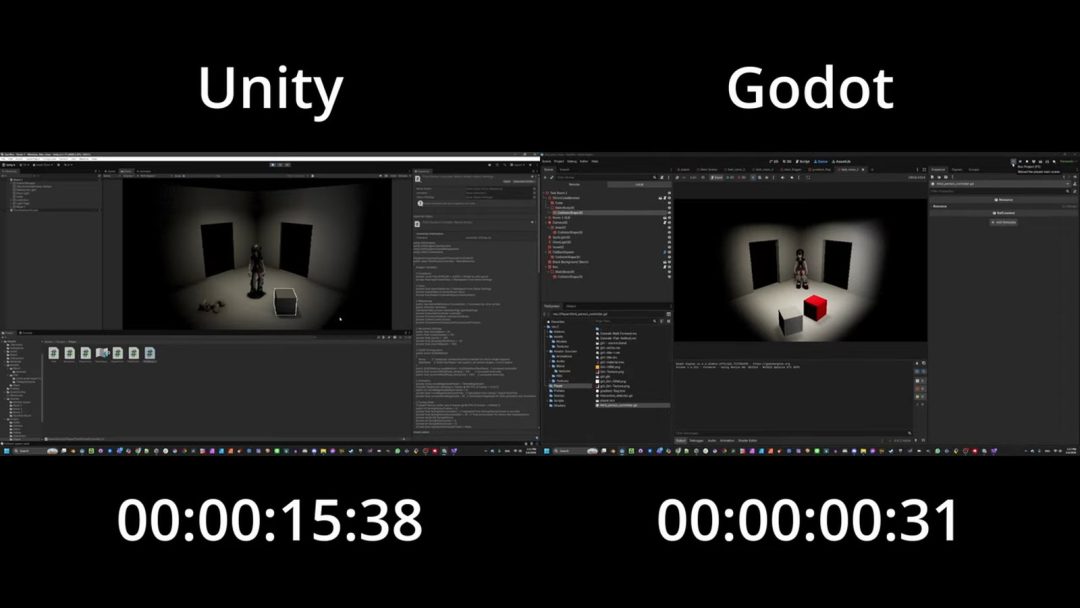
Unity’s performance was also inferior to Godot’s in both full game build times and game startup times. The disparity was particularly striking for the initial build, with Unity taking roughly 15 minutes compared to Godot’s mere 2.5 seconds.
After evaluating the various comparisons, Grové decided to continue developing his game in Godot Engine. The video also delves into additional topics, such as differences in the editor interface, the effort required to import 3D models, and the fact that Godot includes all project assets by default unless manually adjusted, which can lead to unnecessarily large file sizes. For those interested in the finer details, the full video is available on YouTube.
Meanwhile, feedback from fellow developers on Reddit and in the video’s comments section heavily emphasizes Unity’s lengthy build and iteration times, indicating that many users share similar frustrations. At the same time, some commenters noted that Godot’s performance may decline as projects grow in complexity, while others questioned the validity of the comparison’s methodology. It’s important to view the video as one developer’s personal experience rather than conclusive evidence. Nevertheless, Grové’s experiment suggests that developers who are undecided might benefit from testing both engines themselves.
Currently, as suggested by the GDC 2026 survey results, Unity still appears to be the preferred choice for developers seeking job opportunities and career advancement in the industry. However, Godot adoption has been rising steadily each year. According to Godot Foundation engineer Clay John, who spoke to us in February, even large studios are increasingly transitioning to Godot Engine at key project stages, making it intriguing to observe how developer preferences evolve in the future.