




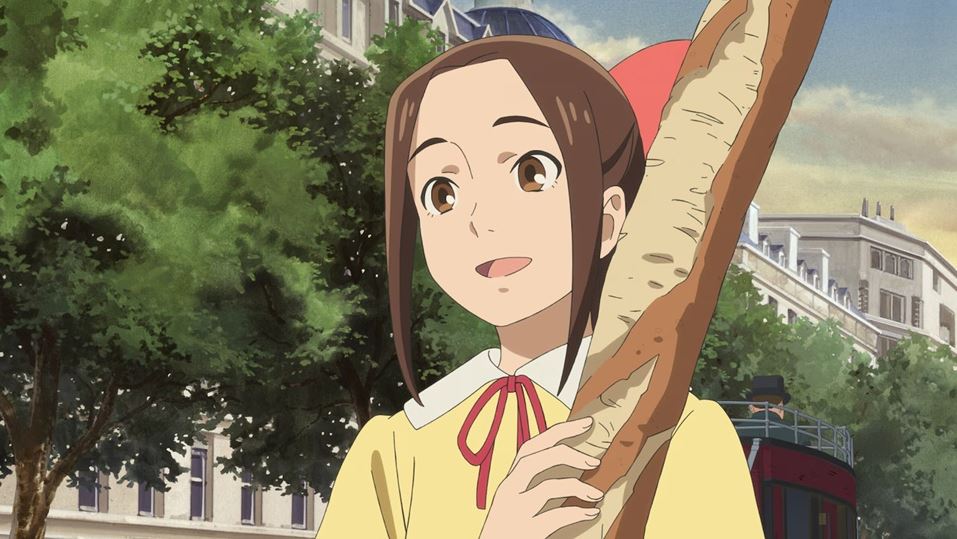
Renowned Japanese anime director Goro Taniguchi, celebrated for his work on Code Geass: Lelouch of the Rebellion, Planetes, One Piece Film: Red, and Paris ni Saku Étoile, recently offered his insights on the trajectory of anime and its potential direction over the next ten years.
During a lecture at a university and reported by Bunshun Online, Taniguchi delved into anime’s historical progression from the 1960s to the present, segmenting its evolution into eight distinct phases. He highlighted how recent societal shifts in Japan have influenced anime’s creative expression and production methodologies.
According to Taniguchi, the anime industry truly solidified during the Astro Boy era of the 1960s. Since then, it has undergone multiple transformations, culminating in what he terms the seventh, or current, phase of anime history.
Reflecting on the rise of the internet and online forums like 2channel (Japan’s counterpart to 4chan), Taniguchi observed that “unprecedented levels of negativity” began affecting production environments in this phase, intensifying pressure on creators. He contends that one of the industry’s most significant contemporary challenges is the emergence of what sociologist Toshio Okada refers to as a “white society” in Japan.

It’s important to note that this term has no racial connotations; instead, it describes a highly transparent and “sterilized” society shaped by smartphones and social media. The theory suggests that as Japanese society becomes more tranquil and interconnected, behaviors perceived as aggressive, disruptive, or unconventional are increasingly discouraged, with superficial social harmony and cleanliness being prioritized.
“I view this ‘white society’ as a phenomenon where all Japanese people, in a sense, are becoming more akin to Kyoto residents,” Taniguchi elaborated, referencing a common Japanese stereotype about Kyoto natives being exceptionally indirect in expressing negative sentiments, prioritizing propriety. “Let’s not engage in anything unusual, let’s be mindful of the group, avoid direct conflict, and show respect to those sharing our space.” The director intriguingly points out that many protagonists in recent ‘narou-kei‘ (isekai-style) narratives align with this trend. Notably, major publishers such as Kadokawa have acknowledged their overreliance on this genre recently.
Taniguchi believes this “sterilization” of Japanese society has impacted not just anime’s themes and characters but also its production structure. The rise of one-cour anime series (12 to 13 episodes) aided the maturation of the industry’s production committee system but simultaneously weakened the traditional model of apprentice animators learning from mentors, stalling the nurturing of new talent. He also argued that the growing sway of original authors (manga or light novel creators behind anime adaptations) and rights holders over anime has complicated the role of anime directors, making it harder for productions to establish a clear creative vision.
According to Taniguchi, producers increasingly prefer staff who are easy to manage and can faithfully reproduce source material without introducing their own creative ideas. Consequently, more ambitious creators gradually receive fewer opportunities and may eventually exit the industry, he states.
Taniguchi describes the current period of anime evolution as an era of “prioritizing profits over creative vision.”
Looking forward, he outlined the eighth stage of the medium’s evolution as the upcoming decade of anime. While Japanese animation has successfully gained global traction, with overseas audiences and creators increasingly appreciating classic Japanese animation, Taniguchi believes this could erode Japan’s competitive edge. He draws a parallel to the significant outflow of Japanese woodblock prints and other artworks to Europe during the mid-19th and 20th centuries.
He cautions that if the domestic anime market continues to prioritize short-term profits and rapidly consumable content aimed at casual fans, Japan may find it challenging to keep pace with the production speed observed in China and South Korea.

Despite these concerns, Taniguchi concluded on an optimistic note, asserting that anime’s future remains secure due to humanity’s fundamental need for stories. “As long as people remain people, they will always require stories. Stories expand our understanding of people and the world, enabling us to experience emotions and choices indirectly, find meaning in events, enjoy excitement and suspense, alleviate loneliness, connect with others, and transmit experiences and wisdom from the past. Anime is capable of encompassing all of these aspects.”