
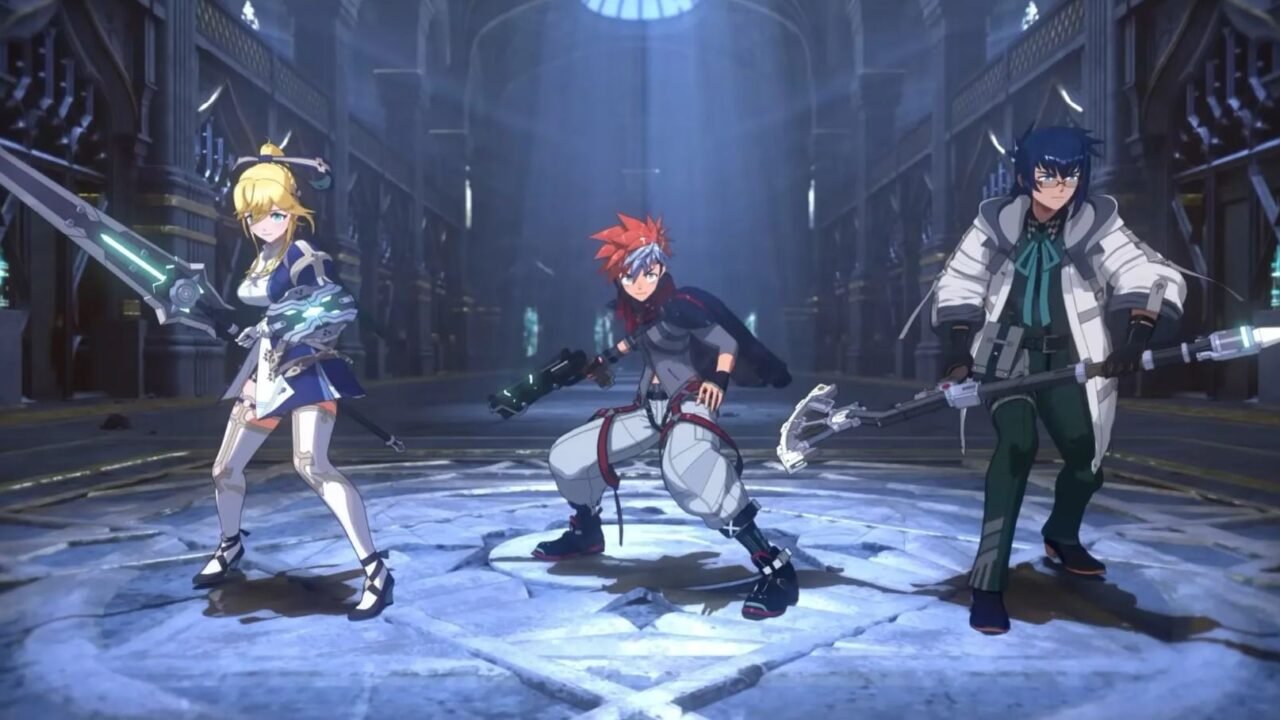

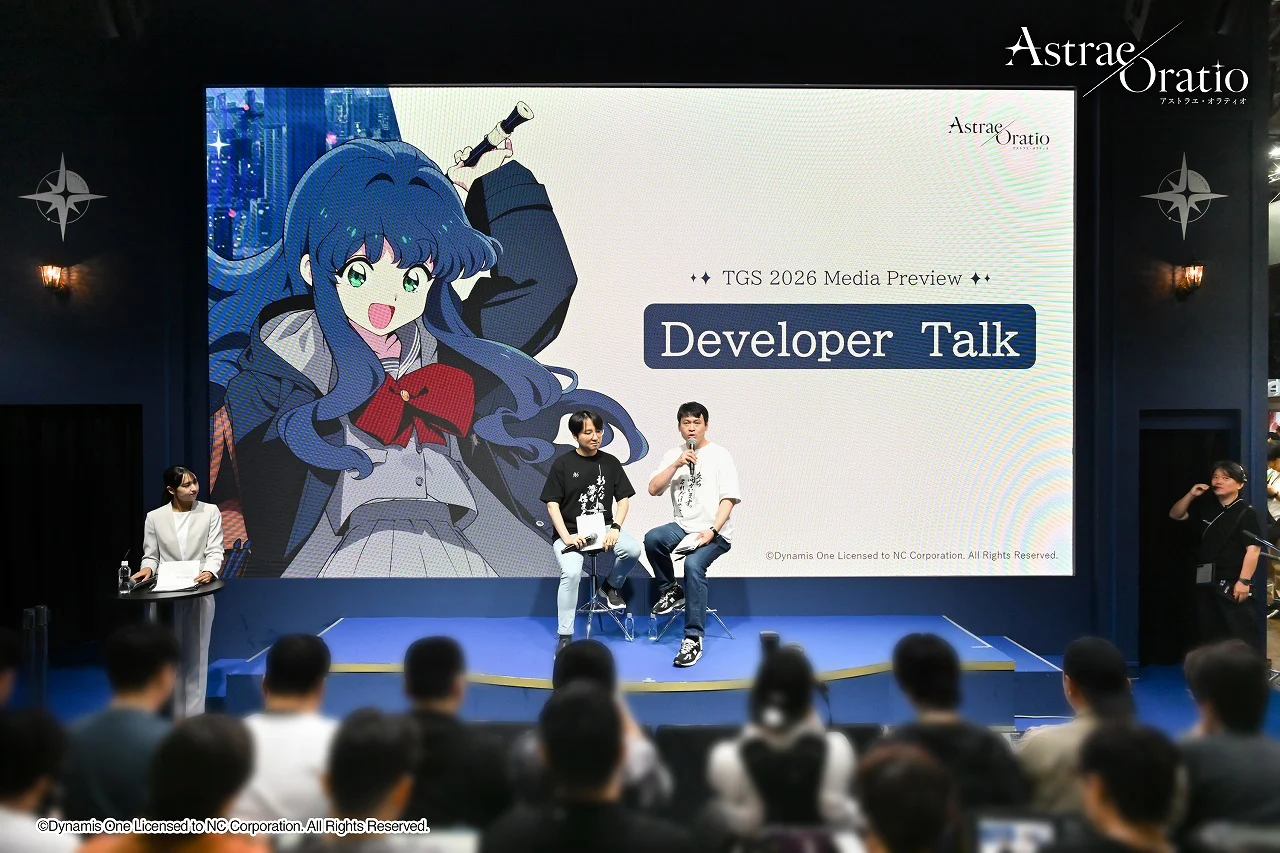
At Tokyo Game Show 2026, Dynamis One and NC (formerly NCSoft) hosted a press event focusing on Astrae Oratio, a much-hyped anime-styled RPG set in a fictional Japan. The creators provided insights into the game’s premise, detailed the battle mechanics, and addressed queries regarding the project.
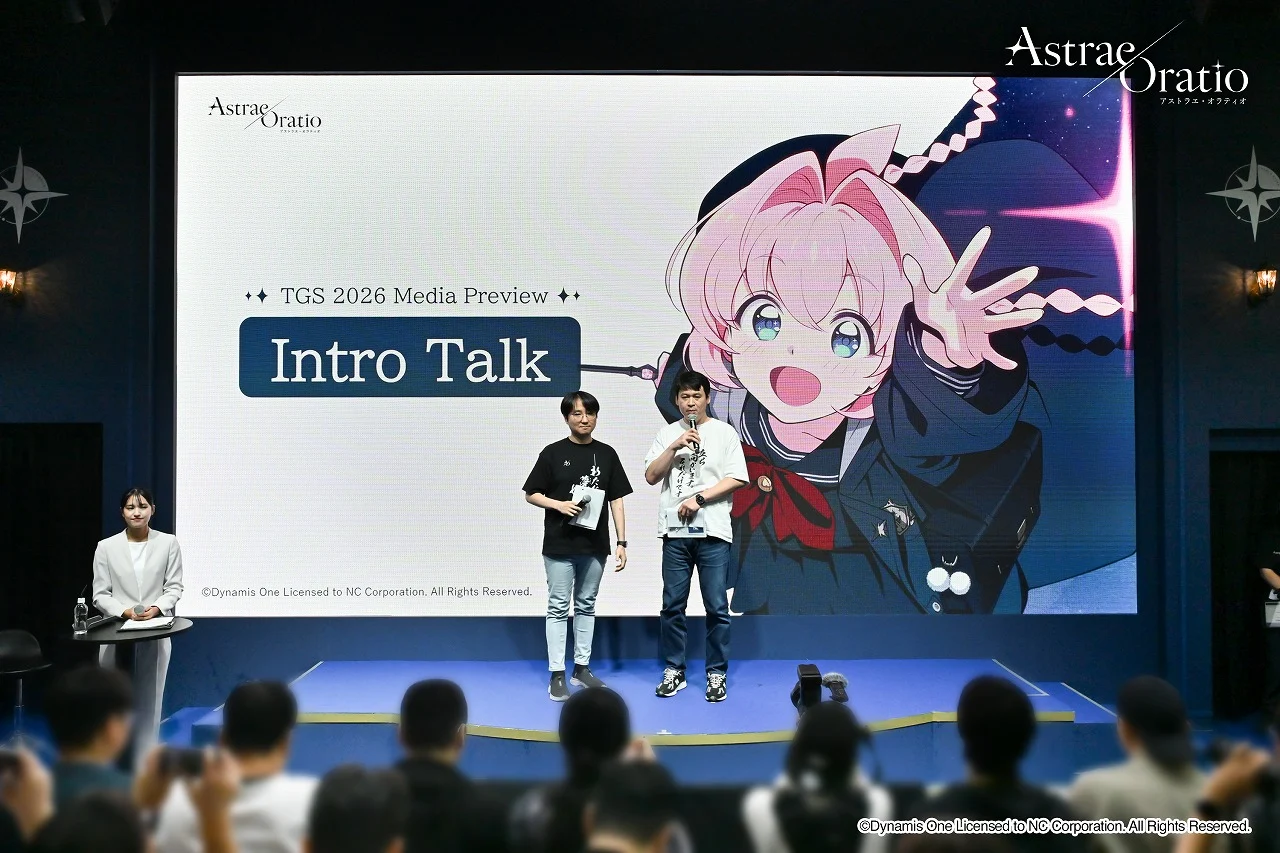
What is Astrae Oratio and why is it termed a “shindenki” (neo-urban fantasy) game?
Director Jong-gyu Lim and art director In Kim stepped up to clarify the concepts behind Astrae Oratio. In terms of narrative, the developers characterize the game as a “shindenki” (or “new denki”) production, where “denki” signifies fantasy tales in which supernatural entities and occurrences seep into the mundane lives of regular people. With Astrae Oratio, the team aims to push the genre forward in a manner exclusive to interactive media.
Astrae Oratio unfolds in an imaginary Tokyo, blending visual and character design elements inspired by Heisei-era retro aesthetics. The game’s central motif is “magic meets bureaucracy,” placing players in the shoes of a government agent responsible for supervising Tokyo’s magicians.
The event then showcased the game’s latest prologue trailer. Despite originating from a South Korean studio, Astrae Oratio defaults to full Japanese voiceovers. Additionally, unlike many titles in the genre, the player character, serving as a self-insert, is visually represented in-game. The trailer also introduced the game’s antagonists, members of the “Other Cabinet.”
A command-based combat system influenced by fighting games
Battles in Astrae Oratio follow a command-based structure. While you assemble a party of three, combat is one-on-one, meaning you engage enemies individually. In scenarios with multiple foes, you tackle them sequentially. The rationale for having three party members despite the one-on-one format ties into how attacks function.
Essentially, the game’s combat resembles rock-paper-scissors—you wait to observe your opponent’s move before making your own. Since enemies alternate between three action types, players must spot cues to discern the incoming move and execute a counter. A successful counter immediately grants the player another turn, enabling a series of attacks.
The first action type is marked by a blue cue, countered by a standard attack. The second is signaled by a yellow cue, requiring a timely guard button press. The third is indicated by a red cue; this attack cannot be dodged, so players must switch to a character with sufficient HP to absorb the blow.
For routine “weak” enemies, their upcoming attacks are displayed on a timeline at the screen’s top. However, for tougher enemies, this information is concealed, forcing players to watch for cues to predict the attack. This approach merges real-time inputs with tactical resource management, including monitoring party members’ HP.
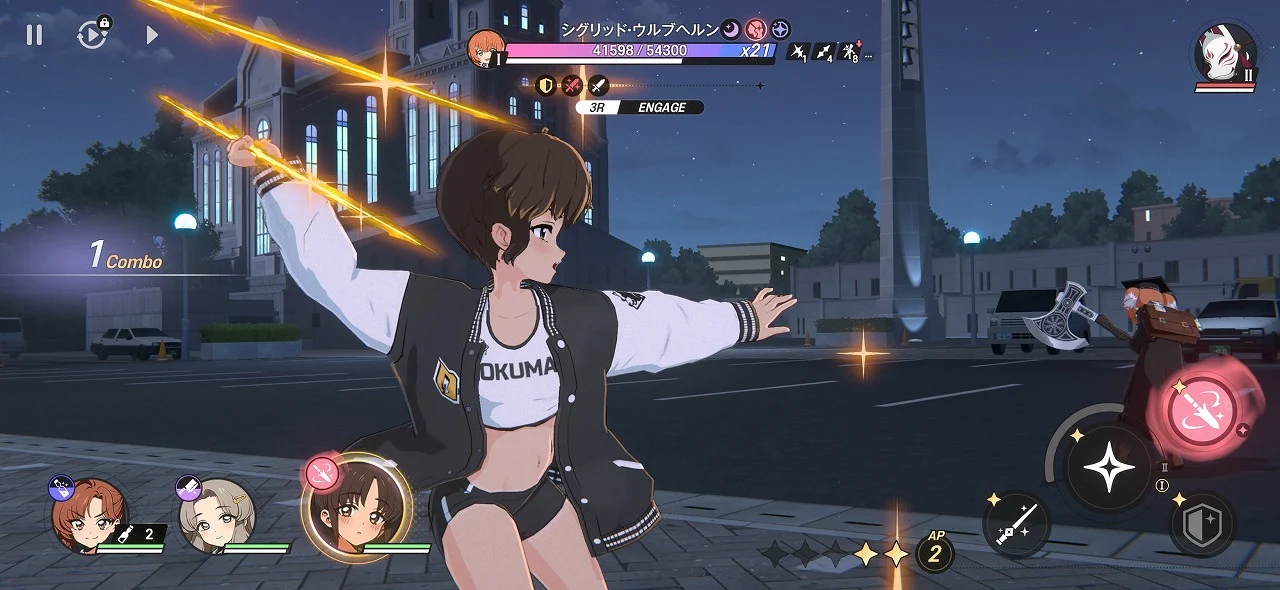
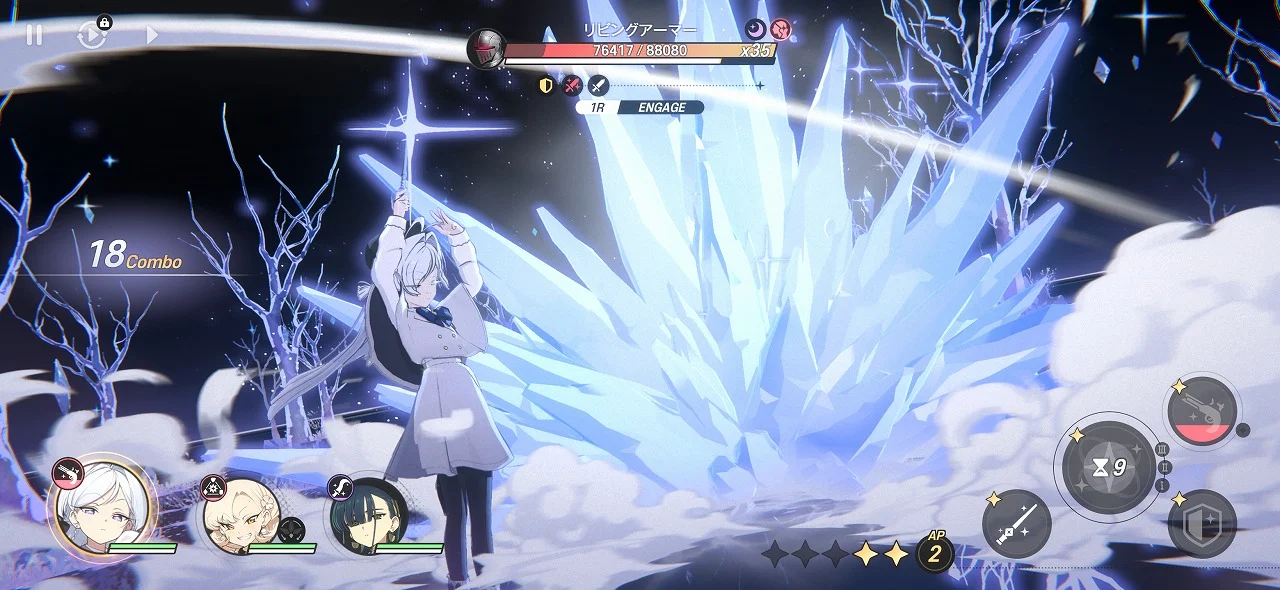
Beyond counters, players can use Combat Skills and Ultimate Skills. Combat Skills are activated by expending AP. They can be chained within a single turn, growing stronger with each consecutive use. Naturally, AP cost varies by character and rises with repeated use, so careful management is key. AP is replenished via normal attacks.
Ultimate Skills, on the other hand, are signature moves. They can be linked with Combat Skills. In the demo, we mainly saw damage-focused Ultimate Skills, but players can reportedly craft combos, such as using an Ultimate Skill to buff a character after a successful counter, followed by rapid Combat Skills.
The director noted that Astrae Oratio’s combat draws from “fighting game mechanics” found in games like Street Fighter. Although command-based, its real-time actions, resource management, and a gauge that, when depleted, stuns enemies for a time reflect this influence. Regarding “Declaration of Dominion,” another core mechanic, the director only mentioned it grants an advantage to the activating side. Further details are being held back until the CBT.
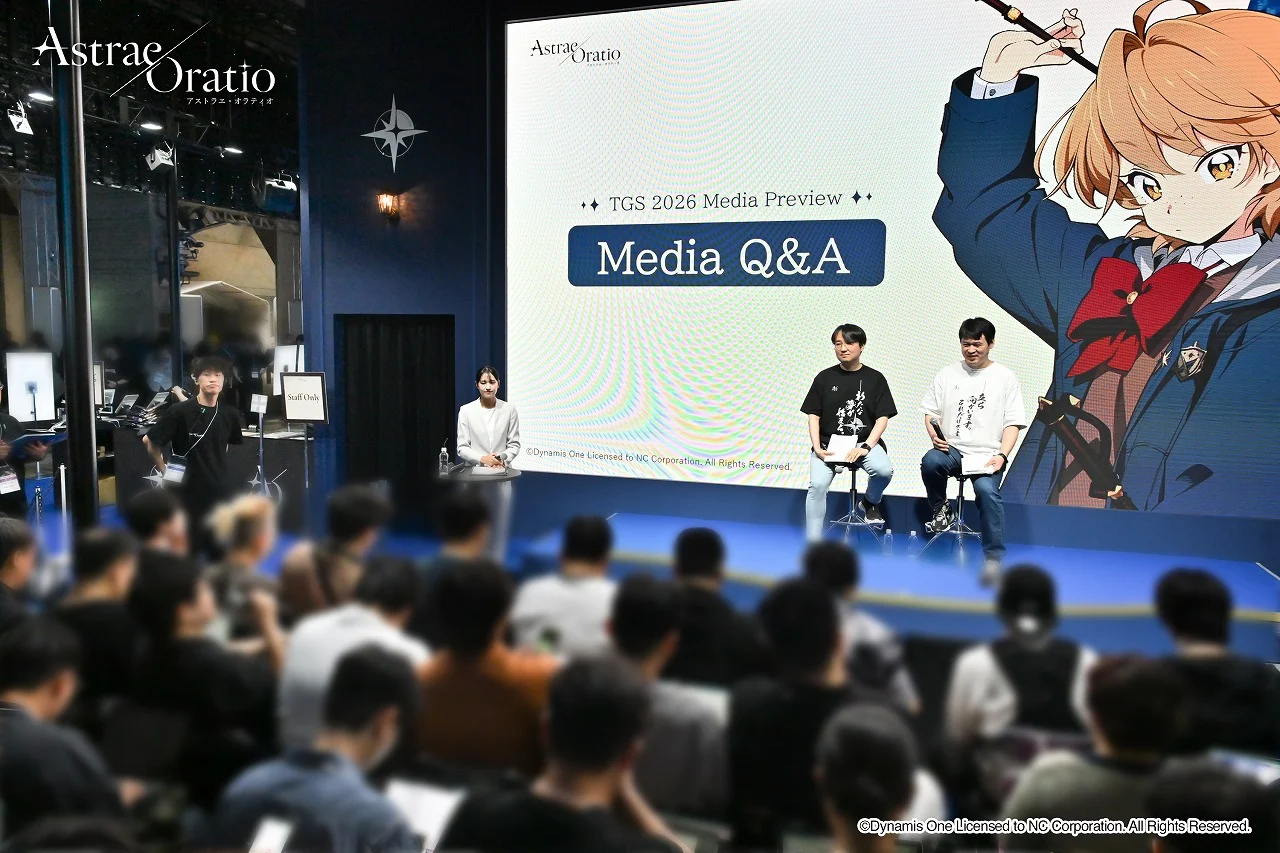
After the presentation, Lim and Kim answered questions from Japanese and Korean press. Below is an excerpt from the Q&A session:
—Approximately how many playable characters are planned at launch? Additionally, how many factions will these characters belong to?
Lim:
We expect roughly 34 characters at launch. We’re currently mapping out about 10 factions, though we anticipate this number will expand later.
—Most of the game’s revealed details so far have centered on characters and visuals. Why reveal the game system now?
Lim:
While we want players to appreciate the characters, our aim is for them to engage deeply with the story and world. We also believed that unveiling the combat system after showcasing the visuals would better highlight the game’s appeal.
—What content can players expect in the upcoming CBT?
Lim:
The CBT will offer roughly three to five days’ worth of story and combat in-game time.
—The protagonist’s appearance revealed at TGS garnered attention. Why was it disclosed now?
Kim:
We chose to reveal the player character’s design because it’s significant not only for the IP or game itself but for conveying the game’s atmosphere—specifically, to show the kind of player who belongs in this world.
—Could you outline your future schedule, including the CBT?
Lim:
Stay tuned for upcoming announcements.
—What inspired the game’s distinctive worldbuilding and “shindenki” theme?
Lim:
For combat, we drew from fighting games like Street Fighter and the Persona series. As for the wo