






Last week, a piece by Japanese publication Toyo Keizai sparked discussion about the anime industry’s recent pivot toward international viewers, igniting debate among both local and global fan communities. The column, authored by Yusuke Onuki, CEO of media firm Bushiroad Move and executive producer of several anime series (including Remake Our Life and The Fruit of Evolution: Before I Knew It, My Life Had It Made), examines the financial framework of late-night isekai anime and its role as a “format for the global market.”
Onuki points out that 90% of the revenue for late-night anime originates outside Japan. He clarifies that producing one cour of late-night anime (approximately 12-13 episodes) demands an average budget of 350 million yen, with the bulk of funding needed prior to the show’s premiere. Given that this constitutes a pre-investment business model, securing project approval is an exceptionally careful process, which is why late-night anime have traditionally depended on a tight revenue model to ensure production studios can recoup costs.
The revenue model for late-night anime was once centered on domestic sales of physical media, such as DVDs and Blu-rays. However, Onuki contends that as the revenue model shifted from physical media to streaming platforms like Netflix, anime’s “reliance” on Western distribution channels became more evident. This implies that production committees would logically shift their focus to the question of “what minimum guarantee are Western distributors willing to provide?”

Onuki explains that this is one of the reasons behind the prevalence of isekai and “narou-kei” anime (anime based on light novels published on the Shosetsuka ni Narou website). “Isekai reincarnation stories meet the criteria for ‘ease of understanding’ and ‘cheap thrills’ at a very high level, making them an exceptionally effective format for the global market,” he writes, noting that a significant portion of the genre’s overseas success stems from the fact that grasping its narratives doesn’t require Japan-specific cultural knowledge.
Another factor contributing to the isekai boom is that adapting already popular novel series into anime is the safest approach for securing project approval with production committees. It is far easier to persuade investors of an anime’s potential success when the source material already boasts a substantial readership and fanbase.
On the other hand, this has resulted in market saturation, and Onuki believes that as a consequence, the industry is exploring other genres that could be profitable overseas.
Although Onuki does not mention this in his piece, a recent example is Kadokawa’s decline in profitability in its domestic publishing business. The company, which has been involved in numerous major anime projects, disclosed in its mid-term management plan for this year that “excessive reliance on isekai” was the factor limiting their profitability.
The assertion that “anime is no longer being made for Japanese audiences” stirred considerable controversy among overseas social media users. However, many Japanese users countered that this is not entirely accurate. While it is true that works likely to perform well overseas are being adapted into anime with “higher priority,” this does not negate the fact that these same works also resonate with a Japanese audience, as one user stated.
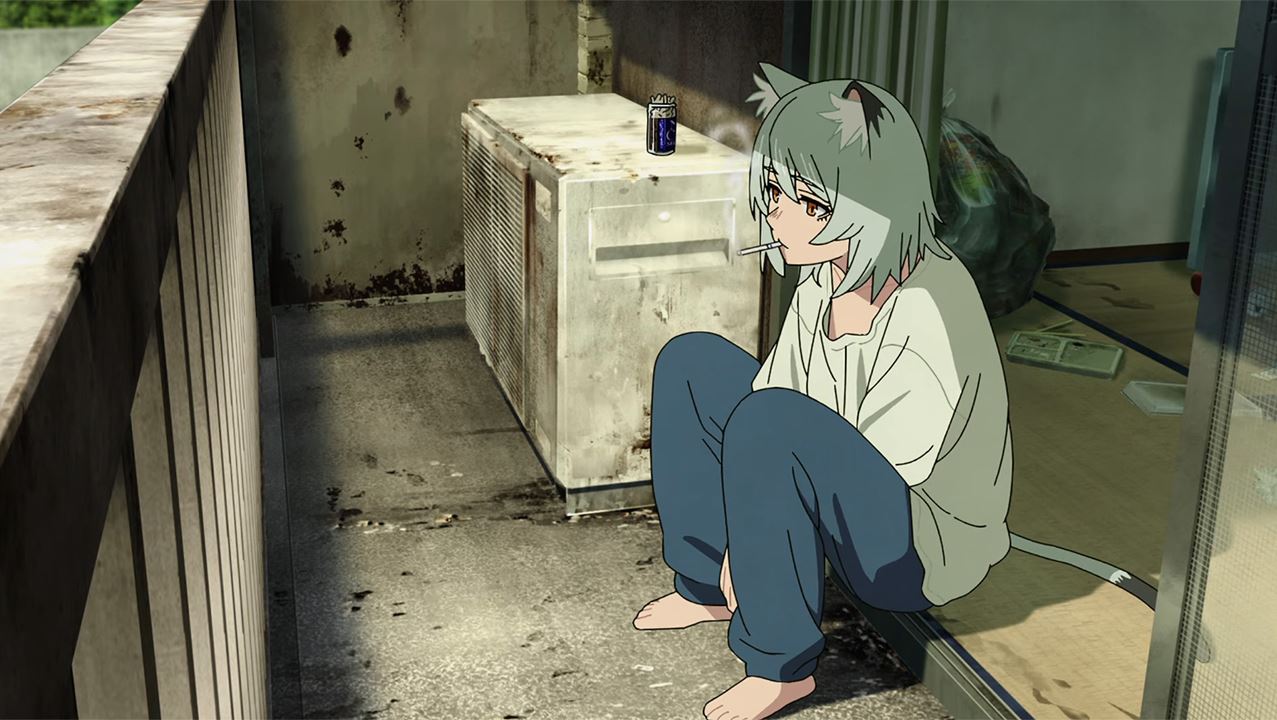
Other users cited Chainsmoker Cat, which debuted as a manga and gained little traction in the West before its anime adaptation, and Chiikawa the Movie: The Secret of the Mermaid Island, the latest domestic box-office blockbuster – as examples of high-profile anime created for its home audience. Similarly, as was noted in Onuki’s piece, most of the isekai and narou-kei novels were adapted into anime precisely because they were popular with the domestic audience. Thus, rather than being created “specifically to cater to the Western audience,” even if an anime has the potential to succeed overseas, in most cases, it is an adaptation of an already established Japanese hit.
In this context, many in Japan believe the recent discourse surrounding the Toyo Keizai article lacked necessary context and nuance. While investors opting for safer and more broadly appealing content in pursuit of commercial hits is arguably present in anime as in other media, the idea of “made for the West rather than Japan” appears to misrepresent the issue.
Related articles: Japanese web novel platform behind the isekai and narou-kei boom officially tops 200 anime adaptations as inquiries for commercialization keep rolling in