


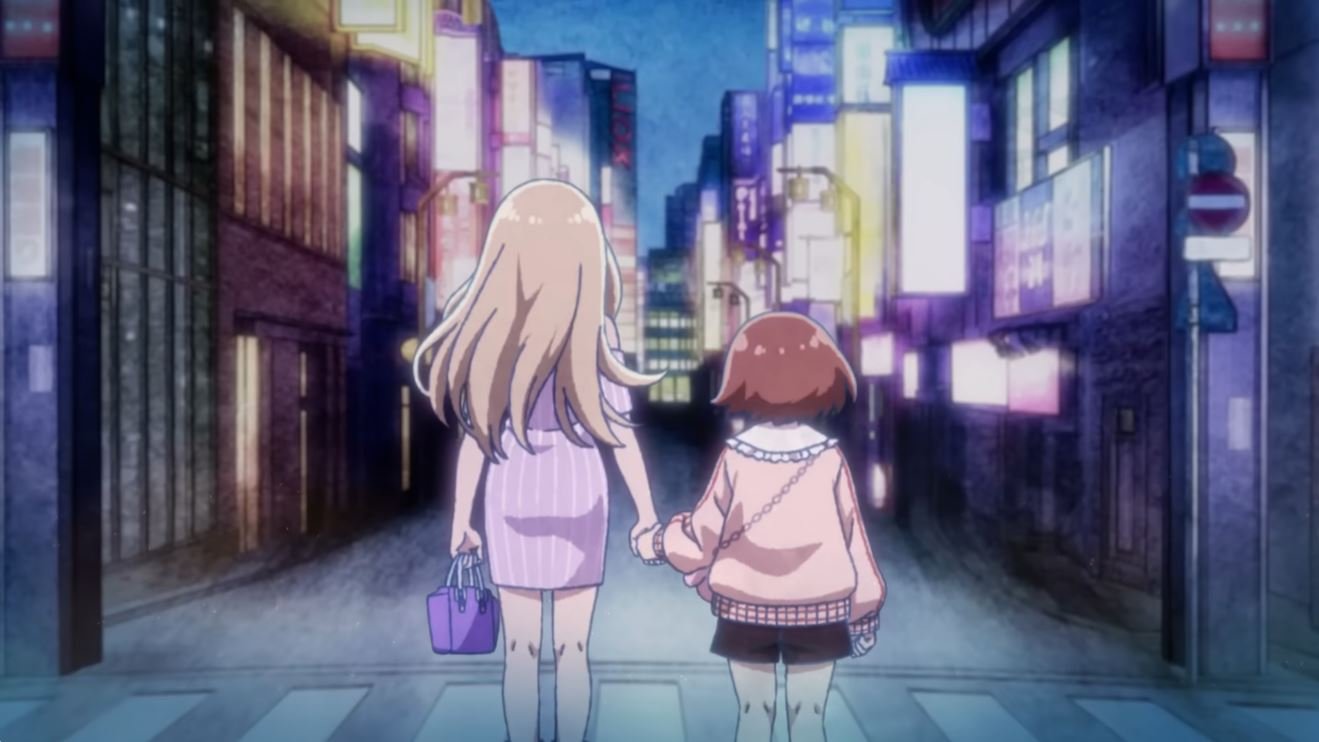
It was revealed on Monday that an anime adaptation of Kodansha’s Mii-chan and Miss Yamada — a somber manga series featuring a protagonist with an intellectual disability — is set to debut in 2027. The news sparked considerable controversy and calls for the project’s cancellation across Japan, prompting the production committee to issue a new statement. Despite the backlash, the anime’s development remains on schedule, though producers have refuted any ill intent and pledged to exercise caution when handling the source material.
Created by Nene Azuki, Mii-chan and Miss Yamada unfolds in Tokyo’s red-light district. The narrative centers on Mii-chan, a new hire at a hostess club, and her seasoned coworker Yamada. Due to her disability, Mii-chan is unable to read and frequently behaves outside societal norms, resulting in errors and mockery from patrons and colleagues alike. In response, Yamada endeavors to assist Mii-chan and protect her, fostering a codependent friendship between the two. The story ultimately culminates in a deeply grim conclusion.
Following the Mii-chan and Miss Yamada anime’s announcement on July 26, Japanese audiences became deeply divided. One faction argued that the series could perpetuate harmful stereotypes or discrimination against individuals with intellectual disabilities, deeming it unfit for broadcast. Conversely, another group contended that halting the project would infringe on freedom of expression.
Key criticisms of Mii-chan and Miss Yamada focus on how disability is portrayed within the story. Critics suggest the narrative leans excessively toward shock tactics and spectacle rather than offering a realistic, nuanced depiction of life with a disability. Notably, as the manga gained traction, there have been reports of young individuals, including children, using “Mii-chan” as a derogatory term for those they view as “non-neurotypical,” a trend some interpret as evidence of the series’ negative impact. The creators have also faced scrutiny for failing to condemn this behavior publicly.
Compounding the controversy, the anime’s announcement coincided with the 10-year commemoration of the Sagamihara killings, a tragedy in which 19 disabled individuals were murdered due to prejudice. Though likely coincidental, this timing was widely perceived as insensitive by the production committee.
Prominently, Japanese animator and character designer Terumi Nishii, celebrated for her work on the JoJo’s Bizarre Adventure and Jujutsu Kaisen anime, voiced strong opposition to the project on X. She lambasted the story for resembling a “freak show” and pledged to expose anyone involved in the anime’s production, even fellow industry professionals. “Fostering discrimination and bullying isn’t freedom of expression,” she asserted.
Conversely, admirers of Mii-chan and Yamada-san argue that the manga cannot be held accountable for the actions of others and that demanding the anime’s cancellation constitutes censorship.
Nonetheless, the intense backlash prompted an official response from the production committee, which states:
“The production committee takes very seriously the various concerns and opinions that have been voiced following the announcement of this anime adaptation. We decided to adapt this work into an anime because we believe there is significant value in expressing the original story through this medium.”
They further vow to approach production with “care,” including consulting experts and implementing appropriate age gates/content warnings.
A separate official X account for the Mii-chan and Yamada-san manga has also chimed in, clarifying: “This work was not created with the intention of discriminating against or disparaging individuals with specific disabilities or those in particular circumstances.”