





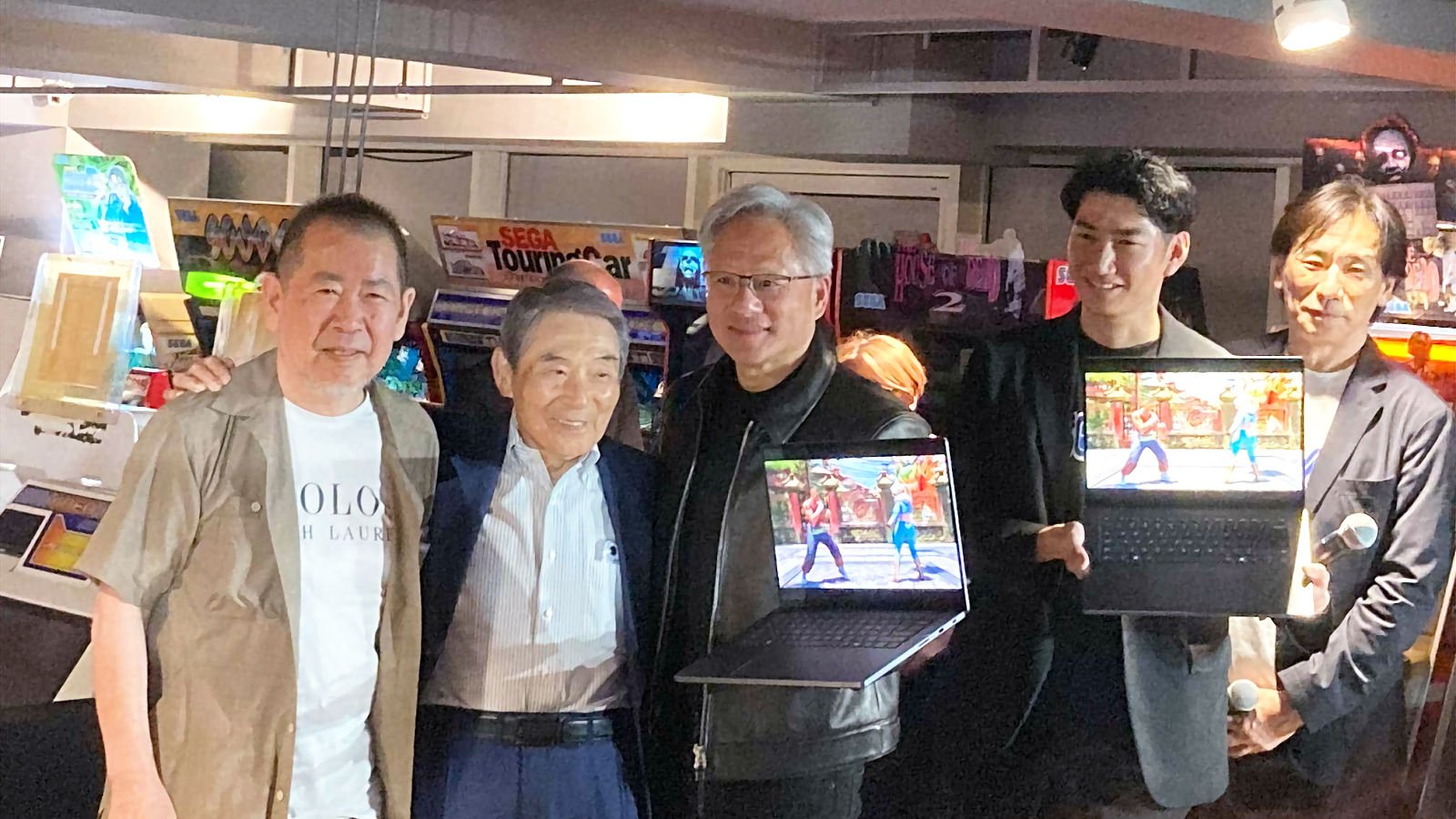
Last week at Tokyo’s GiGO Akihabara, NVIDIA hosted an event celebrating its enduring partnership with Sega and the advancement of gaming technology. A crowd of around 70 gamers, selected via a public raffle, attended the gathering. This report highlights key moments from the occasion, including remarks by NVIDIA’s Jensen Huang.
Representing NVIDIA and Sega at the event were:
Jensen Huang, founder and CEO of NVIDIA
Haruki Satomi, chairman and CEO of Sega Shuji Utsumi, president and COO of Sega
Shoichiro Irimajiri, president of Shoichiro Irimajiri Ltd.; former executive vice president of Honda and former president and chairman of Sega Enterprises
Yu Suzuki, president of YS NET
The impact of encountering Daytona USA in 3D
Jensen Huang made his appearance at the venue wearing his signature leather jacket. After greeting the attendees, he shook hands with Irimajiri and Suzuki before reflecting on the profound influence Sega AM2’s racing game Daytona USA had on him.
Huang:
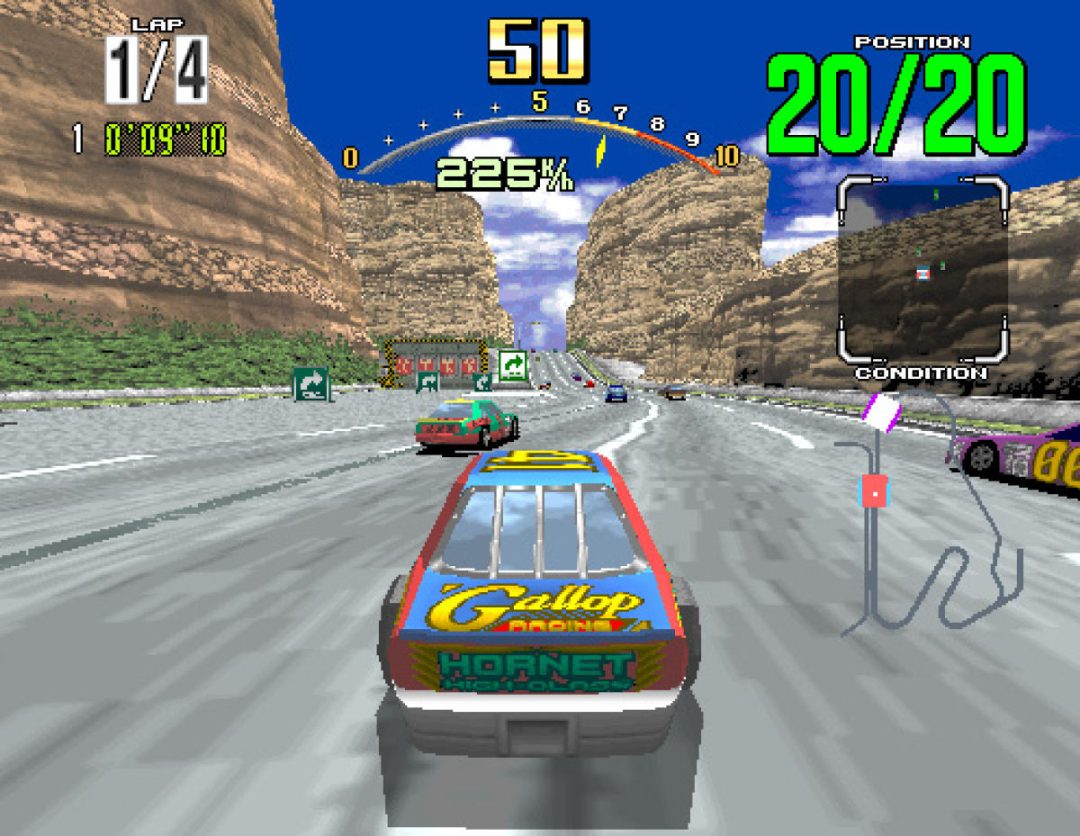
“I first visited Japan in 1994 to meet Yu Suzuki and Shoichiro Irimajiri. NVIDIA had just been established in 1993, and we were beginning to produce chips for games. We needed 3D games, but at that time, no one was developing 3D games for PCs. Only arcades featured games with 3D graphics back in 1994. The only true 3D games then were those created by Suzuki’s AM2 team, masterpieces like Daytona USA, Virtua Racing, and Virtua Fighter.
Daytona USA launched in North America in 1994. Although our task at NVIDIA was to develop chips, we practically spent every day at arcades playing Daytona USA (laughs). The stunning 3D graphics and incredible sound from the cabinet were simply unbelievable.
The game was so flawless that I began to question whether it was truly rendered in 3D. However, it was indeed a 3D game, with perfect texture mapping. It might have been the first game in history to achieve that, and it ran at a smooth 60 fps. We were so inspired by Daytona USA that we knew we wanted to collaborate with Sega.”
How Sega saved NVIDIA at its lowest point
Huang’s wish eventually materialized when NVIDIA was selected to develop the GPU for the Dreamcast, intended as the successor console to the Sega Saturn. Despite NVIDIA’s later success, Huang revealed that the company faced significant challenges during the project. He also recounted how then-Sega president Shoichiro Irimajiri responded to the crisis.
Huang:
“I consider it truly fortunate that Irimajiri brought NVIDIA onto the Dreamcast project. Sega and NVIDIA were collaborating to complete this new console, but about nine months into development, we discovered that the technology NVIDIA was pursuing wouldn’t work. We had been developing features like forward texture mapping and curved surfaces, but those approaches weren’t suitable for the Dreamcast. What the console actually needed was inverse texture mapping and polygons. NVIDIA had chosen the wrong direction. I spoke to Irimajiri honestly and told him, ‘The technology NVIDIA is working on won’t function with the Dreamcast.’
Although we couldn’t complete the project, our company still needed funding to survive. I asked Irimajiri for an investment, and Sega generously agreed. Had Sega not invested in NVIDIA that day, the company likely wouldn’t exist today. While we made the wrong technical decisions, I believe Irimajiri recognized that we were the right people for the job.”
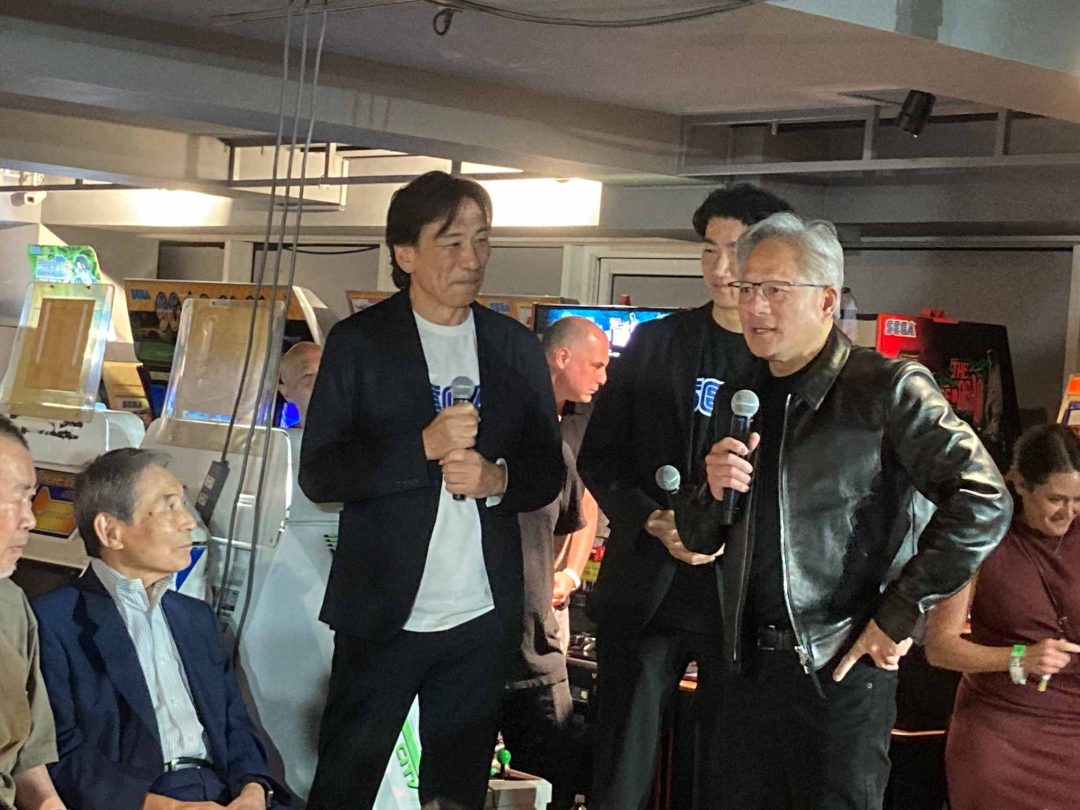
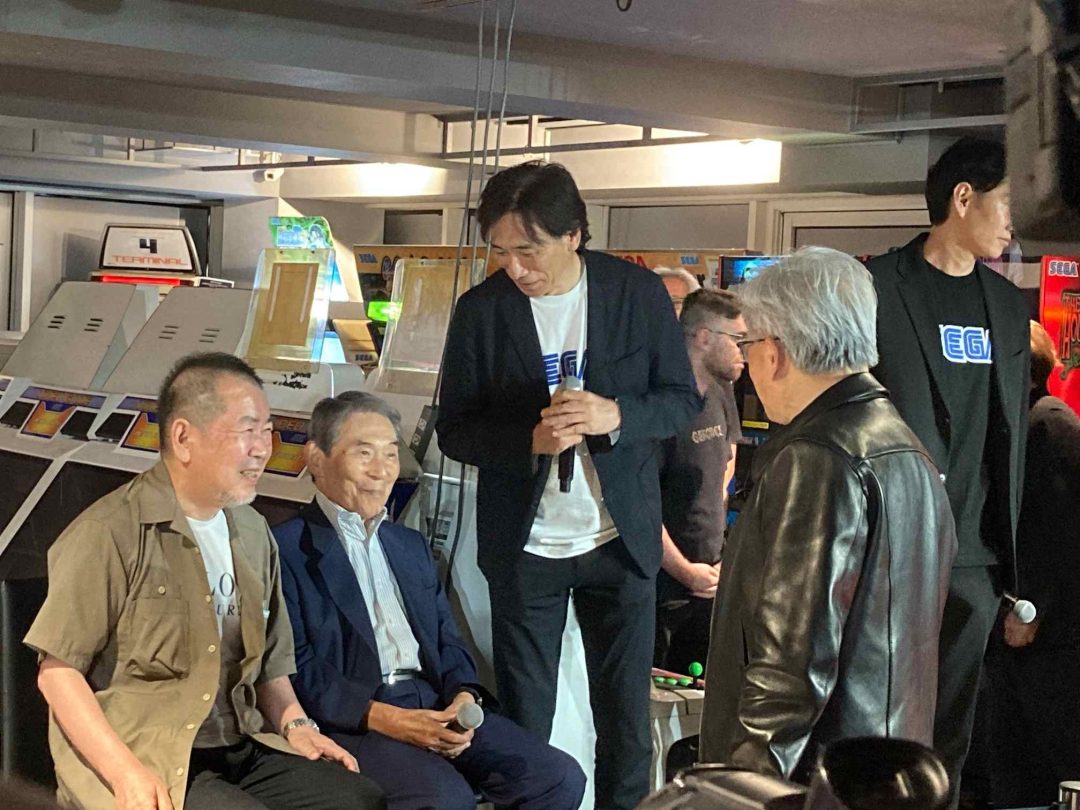
The NVIDIA that Sega helped save would eventually grow into the world’s most valuable company. Having continued to develop GPUs to render rich and fluid 3D graphics, NVIDIA became the first company in history to surpass a market capitalization of $5 trillion in the fall of 2025. In recent years, it has also established itself in the generative AI field.
The event also featured a demonstration of Virtua Fighter Crossroads, running on a laptop equipped with the upcoming NVIDIA RTX Spark, which is scheduled to launch in the fall of 2026. The game’s 3D visuals, showcased ahead of its planned 2027 release, ran exceptionally smoothly on the high-spec hardware. It appeared to be Huang’s first time seeing Virtua Fighter Crossroads running on an NVIDIA RTX Spark-equipped PC too, and he described it as “very beautiful.” He spoke of RTX Spark-equipped PCs as “a groundbreaking technology that transforms the personal computer into a personal AI.”
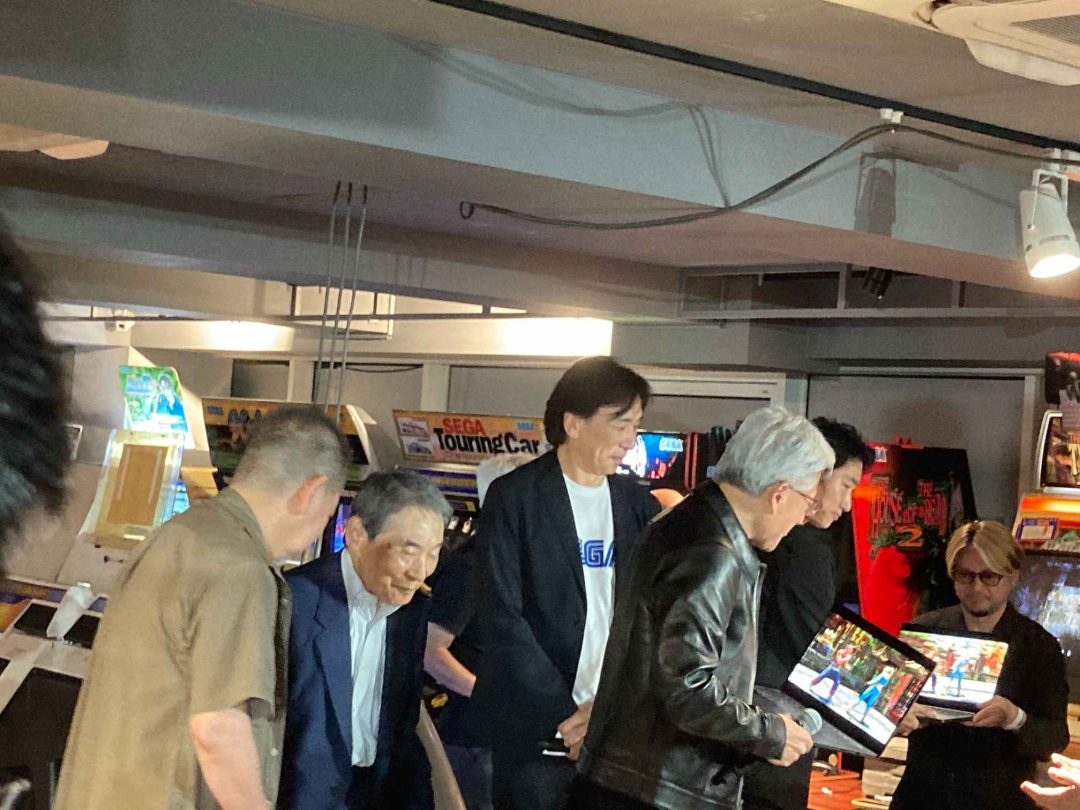
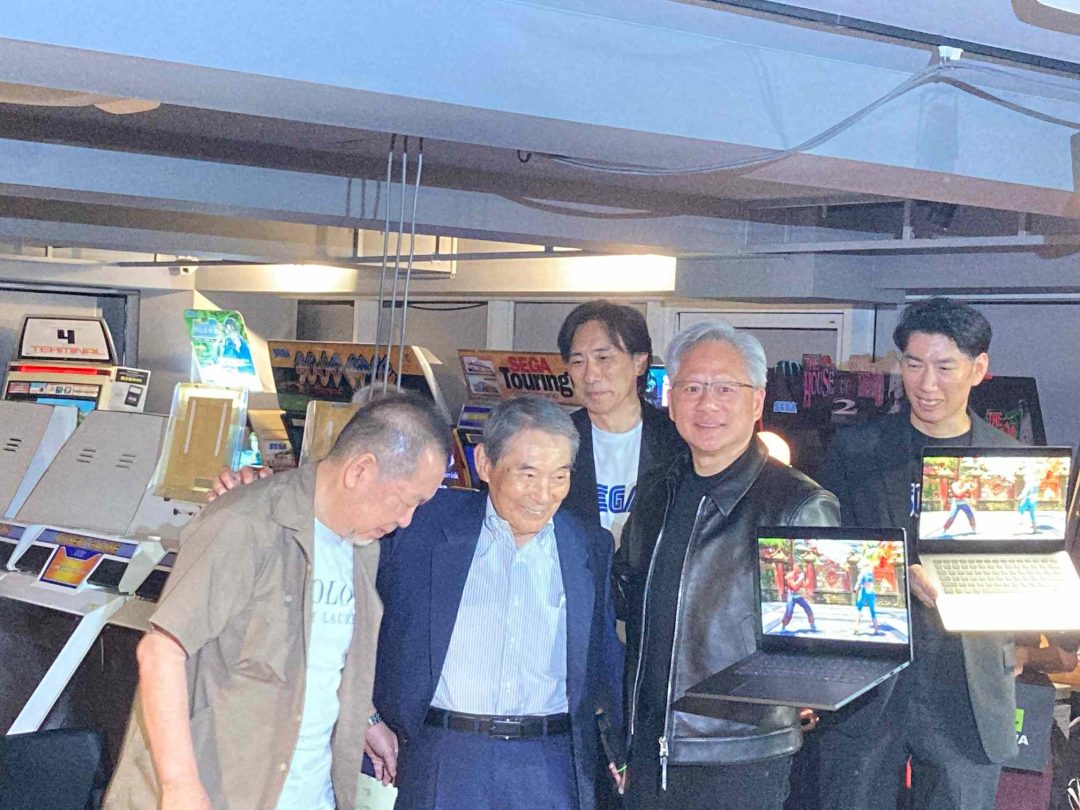
Following the demo, general attendees participated in a raffle featuring prizes including NVIDIA’s flagship GeForce RTX 5090 Founders Edition graphics card and RTX Spark devices, and the winners were barely able to contain their excitement. Some hardcore fans even brought some of their past-gen NVIDIA memorabilia to the venue, and Huang took time to sign them. Seeing the head of one of the world’s most valuable companies casually interacting with fans inside a Japanese arcade was quite fascinating, a scene made possible, perhaps, thanks to the bond between Sega and NVIDIA.
Huang’s respect for Sega and Yu Suzuki
Huang closed the event with a message to Sega and Japan, expressing heartfelt gratitude and respect for Suzuki.
Huang:
“The reason I came to Japan this time is because the Japanese government and NVIDIA are about to announce an extremely significant partnership. It will mark an important turning point, perhaps something you could call the dawn of the AI era in Japan. NVIDIA will also be announcing partnerships in AI and robotics with some of Japan’s leading companies.
Without the friendship and support shown by Sega, Irimajiri and Suzuki, NVIDIA would not be where it is today. Their faith in NVIDIA meant a great deal to me. Sega and Japan will remain in my heart for the rest of my life. They are both deeply important to me. Thank you all very much.
“Without Suzuki, the games we have today would look completely different. Thank you for your monumental work creating 3D games like Virtua Fi