






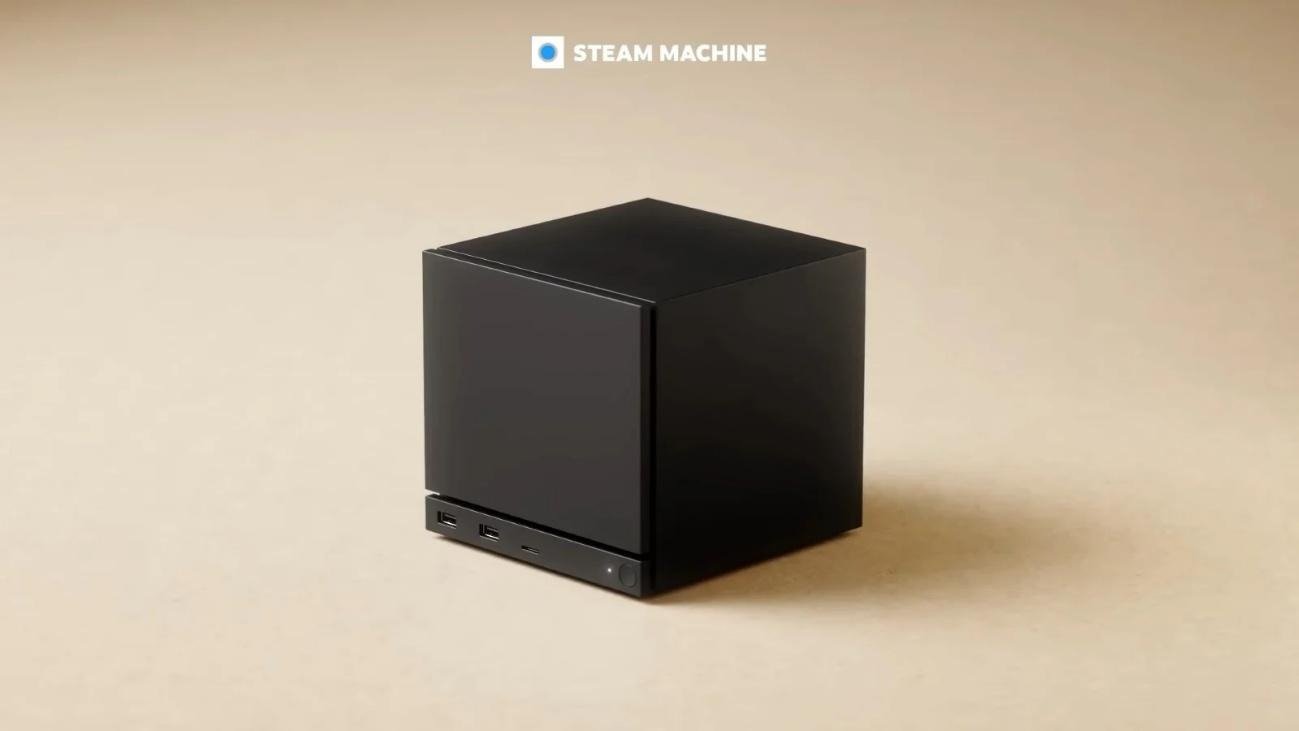
The Steam Machine – Valve’s new desktop gaming PC tailored for Steam game play – has finally arrived, set to launch on June 30. The self-contained 512 GB version will be priced at $1,049, whereas the 2 TB version with a Steam Controller and two extra faceplates will cost $1,428.
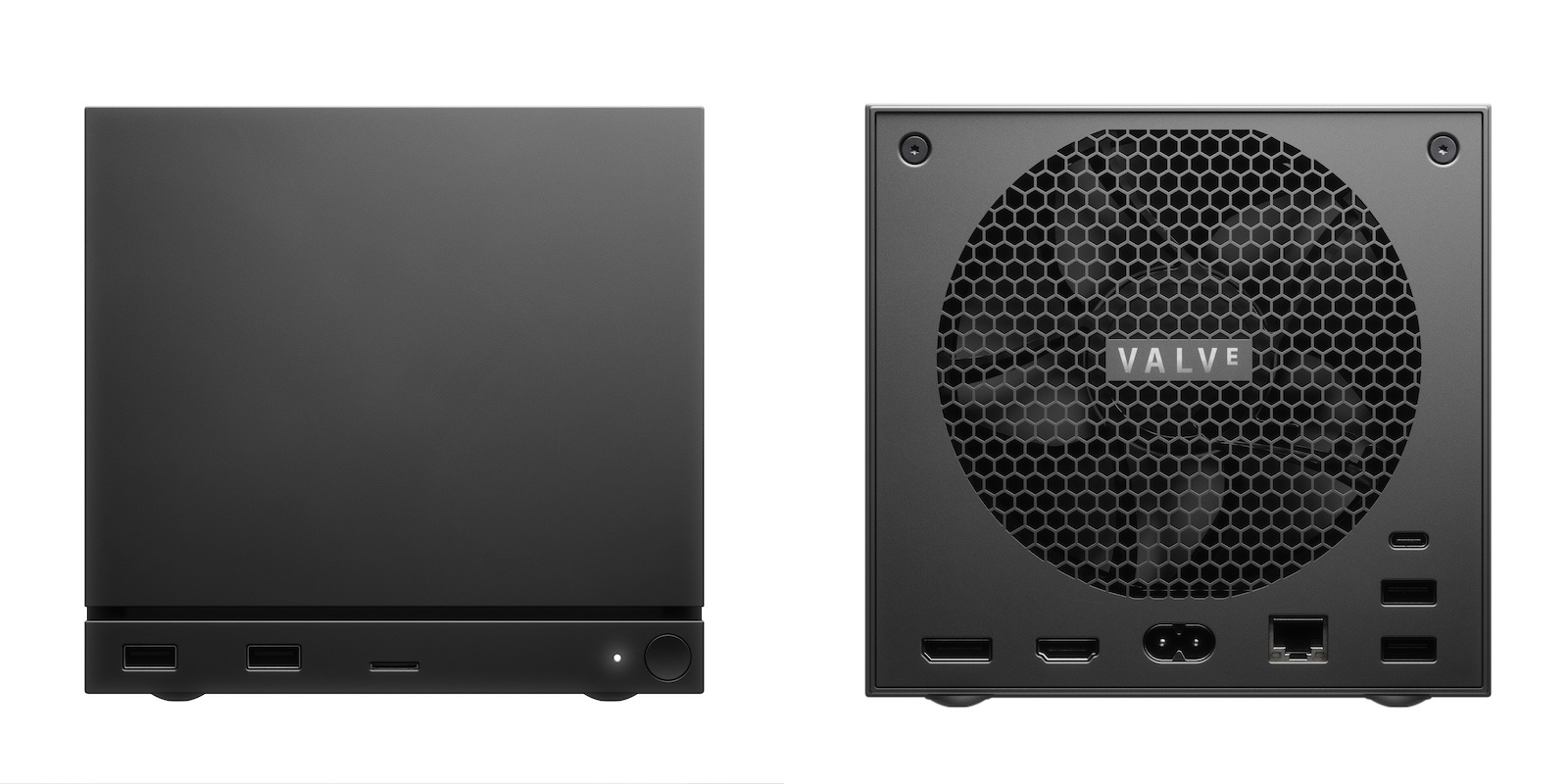
Boasting hardware performance approximately six times stronger than the handheld Steam Deck, the Steam machine is designed as a living room gaming PC. It features a cube-shaped chassis with sides measuring roughly 160 mm, with quiet operation and top-tier cooling capabilities highlighted as key selling points. Like the Steam Deck, Valve will roll out a “Verified” program for the Steam Machine to validate software compatibility.
We recently had the chance to carry out an email interview with the Steam Machine development team at Valve, who provided insights into the hardware’s specifications and the design philosophy behind it. The team members are as follows:
Pierre-Loup Griffais (programmer)
Yazan Aldehayyat (engineer)
Lawrence Yang (designer)
── When determining the Steam Machine’s specs, did you collaborate with game developers? If so, could you share any adjustments you made to specifications based on feedback you received (for example, similar to how Nintendo expanded the Switch’s memory following suggestions from Capcom)?
We partnered with gamers and game developers both inside and outside of Valve during Steam Machine development to ensure we address everyone’s requirements.
──With the Steam Machine functioning as a desktop PC, I anticipate growing interest in hardcore games, but what are your strategies for popular online titles that aren’t compatible with SteamOS?
We remain dedicated to supporting various anti-cheat services. BattlEye and Easy Anti-Cheat are operational on SteamOS, but require developers to opt-in. Kernel-level anti-cheat continues to be a challenging technology to support on SteamOS, and we are actively working on it.
──I understand you developed the Steam Machine’s specs using Steam’s hardware research, aiming to let users “play all games on Steam.” In terms of performance, were there any specific targets, such as running AAA titles at 30 fps at particular graphic settings?
For games to be labeled Steam Machine Verified, they must achieve 1080p at 30 FPS without users needing to adjust settings – ensuring a seamless ‘out of the box’ experience.
──It’s common for a PC’s power consumption to exceed that of a game console by several times, but how does the Steam Machine stack up against a console in this regard?
The Steam Machine’s power usage during gameplay is highly competitive compared to consoles and desktop PCs. Additionally, we’ve fine-tuned power consumption when idle and in sleep mode, so energy usage is minimized even when the device is not in use.
──Compared to other compact gaming PCs, the Steam Deck had the clear edge of SteamOS, enabling users to plug-and-play. However, with the Steam Machine, its competitors will be home consoles, where that kind of setup is already standard. Also, in recent years, it has become common for popular indie games to launch on consoles too. Beyond plug-and-play, what other ways do you plan to differentiate the product?
Steam Machine is centered on giving customers more options to enjoy their Steam library in diverse ways and settings. As such, with Steam Machine, we’ve introduced features not previously found in comparable mini or full-sized PCs – features like HDMI-CEC control – enabling deeper integration with living room TV setups, a dedicated BT antenna to enhance connectivity, and Steam Controller compatibility.
──With the original Steam Link and Steam Deck, you championed the idea of “playing PC games remotely.” How do you think the user experience differs between native and remote play?
It really boils down to use case and flexibility. With Steam Link and our remote play features, players can connect to and play Steam games from any device running Steam. Depending on what the player is looking for, they might want to stream from their Steam Machine to their Steam Deck, from their desktop PC to their Steam Machine, or even stream to a mobile device running the Steam Link app.
──AMD plans to introduce its super-resolution technology, “FSR 4,” to RDNA 3 sometime in 2026. Do you plan to support FSR 4 on Steam Machines that use RDNA 3? Also, do you have a policy of recommending FSR 4 support as part of your efforts to promote gaming on Steam Machines?
We’ve been collaborating with AMD on FSR 4 support for Steam Machine and can confirm it will be coming soon. We can’t disclose more about the timing, but we are eager for players to experience it on Steam Machine once it’s live. It should deliver a significant boost in upscaling graphical quality.
──While the Steam Deck could also function as a Linux OS, I believe that as a desktop PC, the Steam Machine has adopted an even stronger identity as a “Linux PC.” Are you making any updates to SteamOS’s PC mode to align it with the Steam Machine?
Similar to Steam Deck, Steam Machine includes a built-in desktop mode offering a familiar keyboard + mouse desktop user experience. We plan to continue enhancing all aspects of SteamOS, including the desktop interface. We look forward to gathering more feedback from our customers to understand what they’d like to see in future SteamOS features.
──Given that the Steam Machine is capped at 60 FPS and supports VRR (Variable Refresh Rate), is this intended to encourage users to use the 40 FPS mode? Is operation at 120 FPS not supported?
Steam Machine does not have a strict cap at 60 FPS. By default, we max out at what the connected monitor or TV can handle, but users have the option of enabling higher FPS than the refresh rate of their display. But as you noted, VRR does deliver a great experience even when a game is not locked to 60.
The Steam Machine will launch on Jun 30. Pre-orders are now open.